Spatial interventions that explore how people engage, perceive and interact with space — activating new relationships between user, environment and experience.
These projects explore how architecture can move beyond static solutions — becoming a medium to engage users and reveal new possibilities of use and perception.
I approach playful design in architecture not as decoration or spectacle, but as a way of asking what a space could do that it is not doing yet. Each project starts from a specific situation: a material, a behaviour, a constraint, or a social need. Play becomes the method to test new relationships between people and the built environment.
The two projects below share this principle. Both were designed as spatial interventions — objects or installations that invite users to participate, not just observe. Both use play as a tool for awareness: of water, of the environment, of each other.
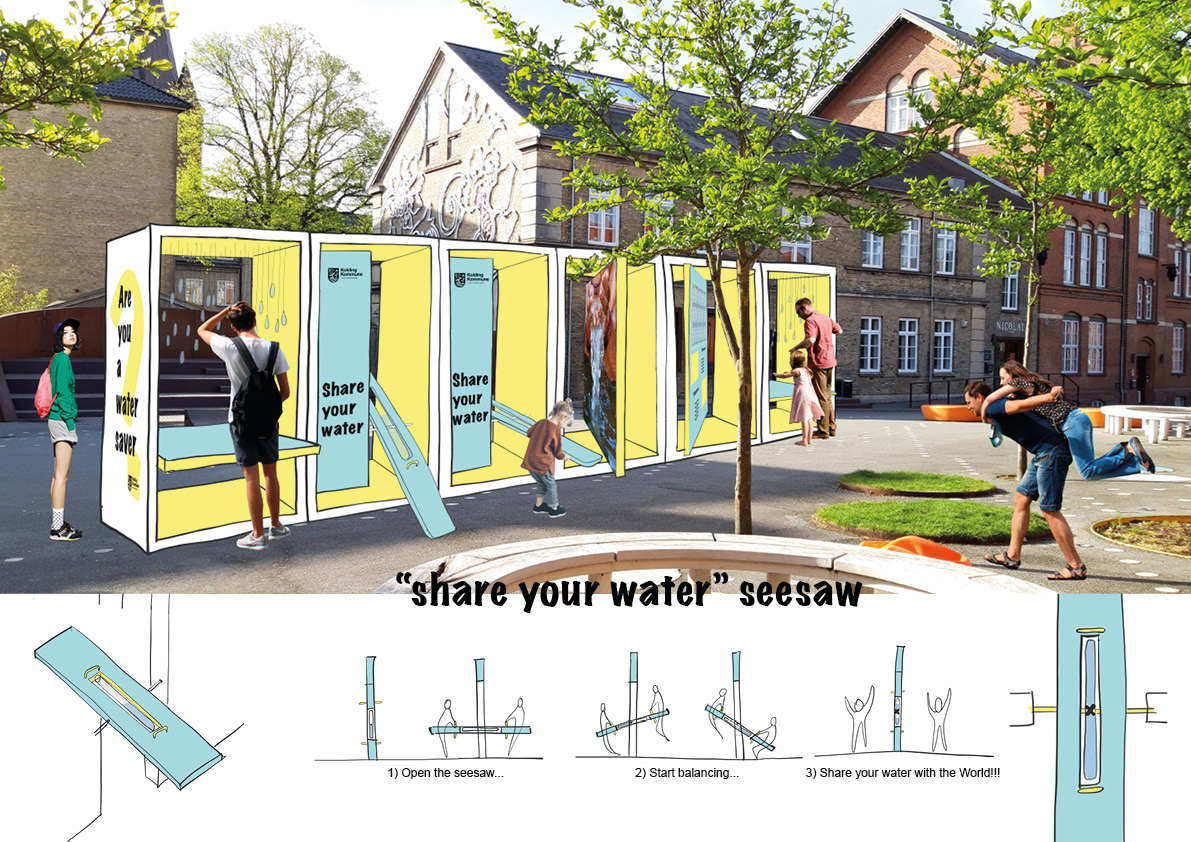
An interactive installation that invites users to engage physically and playfully with water — transforming environmental awareness into action through direct experience.
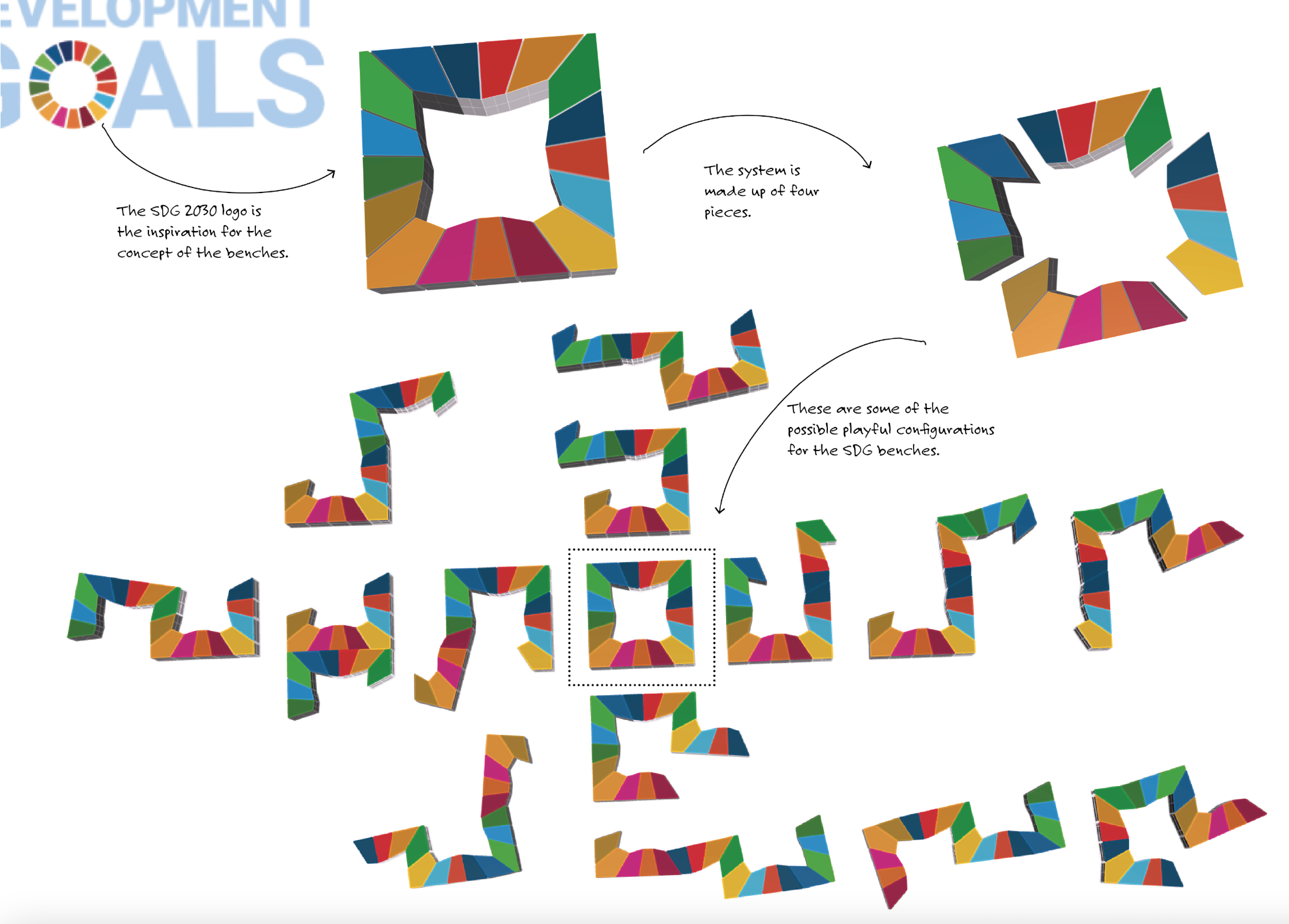
A series of spatial elements designed to encourage interaction and reinterpret everyday use — using play to make the Sustainable Development Goals visible, tangible and part of daily experience.